Don Quixote's Defeat by the Knight of the White Moon
Don QuixoteDon Quixote’s Defeat by the Knight of the White Moon is the decisive beachside encounter in which Don Quixote loses a duel and must accept a year’s retirement from arms and adventure. The defeat changes the course of his travels without making him renounce Dulcinea del Toboso: he accepts the agreed penalty, but will not let the result be taken as proof that she is less than the fairest woman in the world. The scene makes defeat both a practical constraint and a test of what, for Don Quixote, cannot be surrendered.
The Challenge and Its Terms
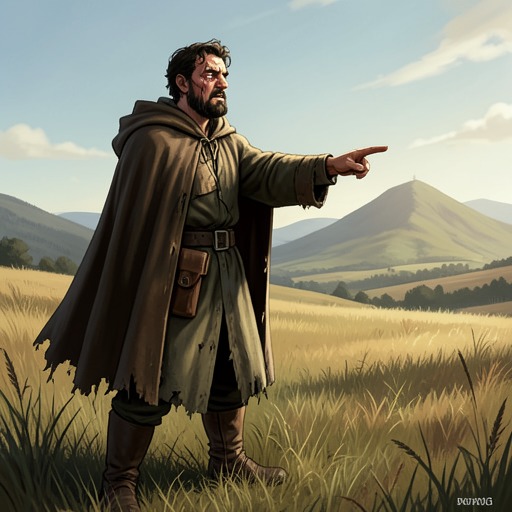
One morning, while walking along the beach in full armour, Don Quixote encounters a knight whose shield bears a shining moon. The stranger names himself the Knight of the White Moon and proposes combat over the precedence of their ladies’ beauty. He requires Don Quixote to acknowledge that his own lady, whoever she may be, is incomparably fairer than Dulcinea del Toboso. The contest is therefore not merely a test of arms: its declared object is to make Don Quixote publicly yield the belief that governs his devotion to Dulcinea.
The Knight of the White Moon sets out the consequences before they fight. If Don Quixote loses, he must lay aside his arms, stop seeking adventures, and return to his village for a year, living in peace and quiet; if the challenger loses, his head, arms, horse, and renown will be at Don Quixote’s disposal. Don Quixote agrees to the conditions, but draws a careful boundary around what he will accept. He argues that the challenger could not have seen Dulcinea, since seeing her would remove any doubt about her beauty. He accepts the duel rather than conceding the claim, and refuses the offer to take the challenger’s renown, which he says he neither knows nor needs.
The Duel on the Beach
The encounter attracts attention from the city. The Viceroy of Barcelona comes to the beach with Don Antonio Moreno and other gentlemen, initially suspecting that the challenge might be a fresh adventure arranged for Don Quixote. He hears the terms from the Knight of the White Moon and asks Don Antonio whether he knows the challenger or whether the affair is a joke. Don Antonio can provide no answer. The Viceroy hesitates, uncertain whether the combat should proceed, but permits it when neither knight will withdraw.
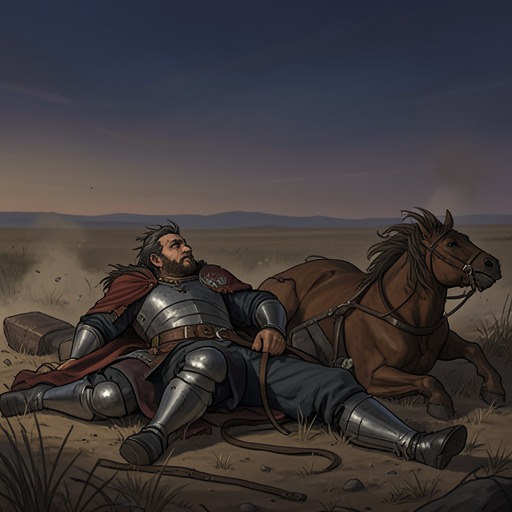
Before the charge, Don Quixote commends himself to heaven and to Dulcinea, as he customarily does before combat. There is no trumpet or other signal: the two knights turn their horses at the same instant and ride toward each other. The Knight of the White Moon reaches Don Quixote before he has crossed the full course. His encounter sends Don Quixote and Rocinante to the ground, and the challenger demands that the defeated knight admit the agreed conditions. The suddenness of the result reverses the promise of a contest in which Don Quixote’s confidence has so often carried him into danger: this time, the terms are settled by a loss he cannot argue away.
Defeat Without Recantation
Bruised and stunned, Don Quixote answers that Dulcinea remains the fairest woman in the world and that he is the most unfortunate knight on earth. He asks the victor to take his life rather than leave him with his honour taken. The Knight of the White Moon refuses to kill him. He insists that Dulcinea’s reputation will remain undimmed and requires only what the challenge specified: Don Quixote must return home for a year, or for whatever longer period the victor may impose.
This distinction defines the outcome. Don Quixote does not treat the fall as evidence against Dulcinea, nor does he retract his claim in order to escape the penalty. Instead, he agrees to observe the remaining conditions so long as nothing prejudicial to her is demanded. His body has lost the contest; his account of Dulcinea’s beauty remains intact. The episode thus separates the practical authority of defeat from the inward loyalty that the challenge was designed to test.
Consequences and Narrative Significance
The Knight of the White Moon rides back into the city after receiving Don Quixote’s promise. The Viceroy asks Don Antonio to follow him and discover who he is, leaving the challenger’s identity unresolved in the immediate aftermath. Don Quixote is raised and carried back into the city in a hand-chair sent for by the Viceroy. Rocinante cannot move for the moment, while Sancho Panza is too disheartened to know what to say or do.
For Sancho, the loss threatens several hopes at once. He fears that Rocinante may be crippled and that Don Quixote has been badly shaken; he also sees the promised year without arms as darkening the glory of his master’s achievements and sweeping away the expectations raised by promises recently made to him. His suspicion that the whole affair might be a dream or enchantment shows how difficult it is to absorb a defeat that has immediate, enforceable terms. The duel therefore reaches beyond Don Quixote’s private honour: it interrupts the shared journey and puts the squire’s anticipated rewards in doubt.
The scene’s force lies in that contrast between an irreversible outward result and an unchanged inward allegiance. Don Quixote must go home and refrain from taking up arms, but he does not acknowledge the Knight of the White Moon’s claim about Dulcinea. The penalty turns the adventure toward enforced rest, while the unresolved identity of the victor and Sancho’s shaken expectations keep the encounter’s consequences open beyond the beach.